

The New Seafarers Code of Conduct Explained : DGS Order 10 of 2025
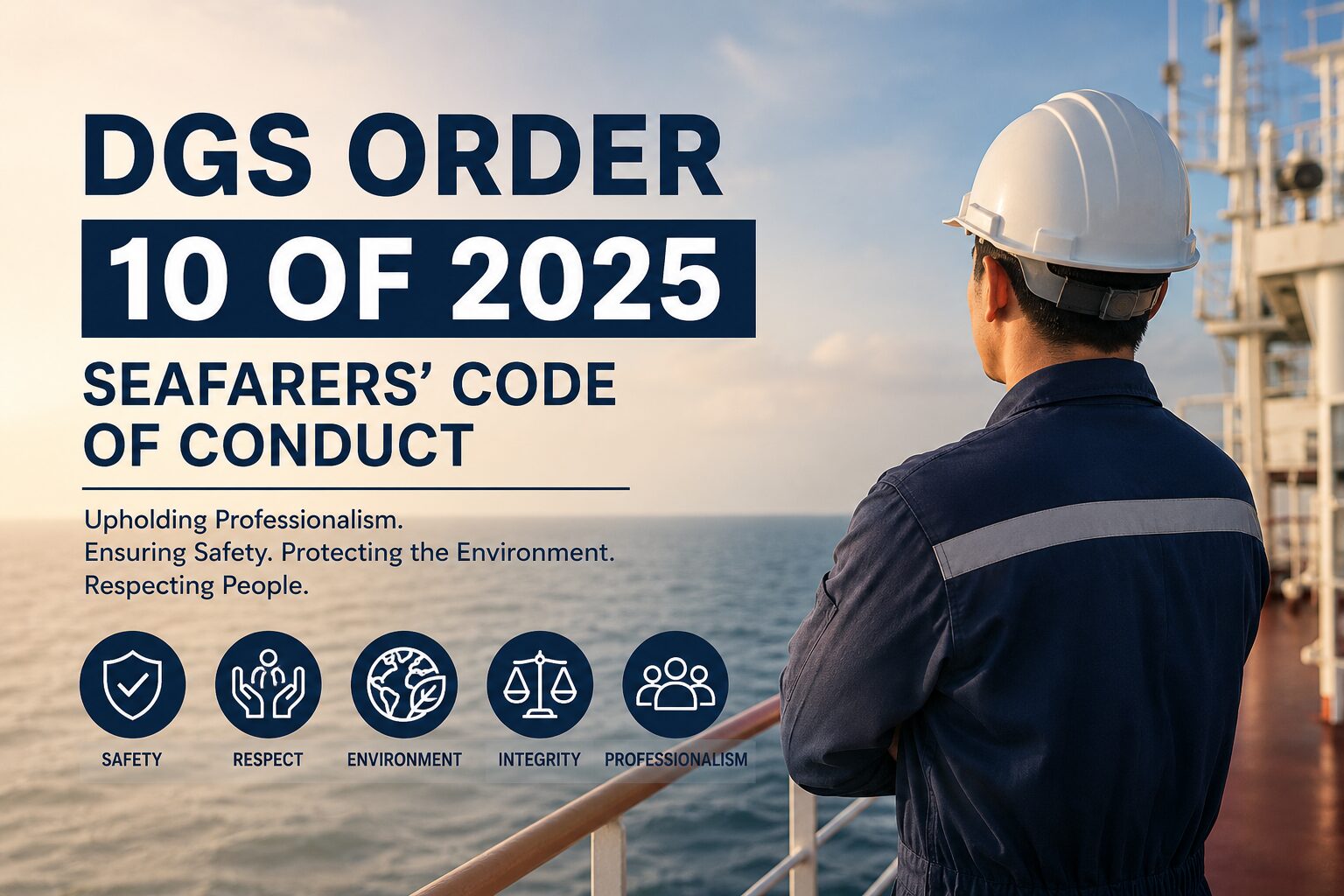
The New DGMA Seafarers’ Code of Conduct
What Every Indian Seafarer Needs to Know Before January 1, 2026.
For decades, Indian maritime regulations have been communicated through a scattered web of DGS circulars and notices. However, a massive operational shift is on the horizon. Effective January 1, 2026, the Directorate General of Shipping is consolidating these rules into a single, comprehensive Seafarers Code of Conduct. You can download the official DGS Order No. 10 of 2025 PDF here.
Whether you are a Master, a Chief Engineer, a fitter, or a cook, this manual will dictate how your professional conduct is evaluated. Here is a breakdown of what the new framework entails and how it will impact your next contract.
1. The Shift to a Centralized Rulebook
The primary goal of the 2025 manual is to align Indian maritime operations with global standards like the Maritime Labour Convention (MLC 2006), MARPOL, and SOLAS. It establishes non-negotiable expectations regarding human rights, zero-tolerance for workplace discrimination, strict health and safety compliance, and environmental stewardship.
2. The Risk Matrix: How Violations Are Categorized
Moving away from arbitrary disciplinary actions, the enforcement mechanism now uses a structured Risk Matrix. Offenses are categorized into three severity levels, ensuring everyone knows exactly what the consequences of their actions will be:
| Severity Level | Risk Profile | Examples of Offenses | Standard Penalties |
|---|---|---|---|
| Level 1 | Minor | First-time fake logbook/record entries, minor off-duty alcohol breaches, or basic administrative lapses. | Formal warnings or up to a 6-month suspension of Certificate. |
| Level 2 | Moderate to High | Drunkenness on duty, bullying or harassing fellow crew members, medium-sized pollution incidents, or bypassing safety protocols. | Suspension of the CoC or CDC for 1 to 2 years. |
| Level 3 | Catastrophic | Intentional OWS bypass (the "Magic Pipe"), massive oil spills (over 700m³), extreme negligence causing loss of life, or abandonment. | Permanent ban and cancellation of all maritime certifications. |
3. Senior Officer Liability (Masters & Chief Engineers)
As future or current Chief Engineers, you must be aware: turning a blind eye is now a punishable offense. The manual stipulates that if a Master or Chief Engineer fails to report a Level 2 or Level 3 violation committed by their crew (such as bypassing safety interlocks or intentionally falsifying the Oil Record Book), the senior officer themselves will be held accountable.
Complicity or failure to enforce the code can result in the suspension of the senior officer's own Certificate of Competency (CoC).
4. The INDoS Star Rating System
The regulatory body is adopting a data-driven approach to track compliance. Your behavior, safety record, and professional conduct will soon be tied to a Star Rating System linked directly to your INDoS profile.
- The Upside: Top-tier shipping companies and RPSL agencies will use these ratings to streamline recruitment, rewarding highly compliant seafarers with better opportunities.
- The Downside: A poor rating could severely hinder your career progression, complicate contract renewals, and flag you during MMD examinations.
5. The Appeals & Grievance Mechanism
If disciplinary action is initiated against you, the manual ensures a formal pathway to contest the decision, maintaining checks and balances against the authorities.
- The 30-Day Appeal Window: If an MMD Principal Officer suspends your certificate or imposes a penalty, you have the statutory right to file a formal appeal directly to the Director General of Shipping (DGMA) within 30 days of the order.
- Mandatory Grievance Redressal: Every ship and RPSL is now required to have an active, auditable Grievance Redressal Mechanism. If your complaints about safety, food, or wages are ignored onboard, you can escalate them directly to the DGMA without bypassing the chain of command.
6. Enhanced Protections & Natural Justice
The manual is not merely a tool for punishment; it heavily emphasizes seafarer welfare and fair treatment.
- The Show-Cause Notice: You cannot be arbitrarily suspended. Before any punitive action is taken, seafarers are issued a formal Show-Cause Notice. This gives you the legal right to present evidence, defend your actions, and explain mitigating circumstances (such as an unforeseeable mechanical failure).
- Whistleblower Protection: The code empowers seafarers to report unsafe working conditions, discrimination, or RPSL exploitation without fear of retaliation. However, the manual notes that malicious or entirely false reporting carries its own penalty of a 3 to 12-month suspension.
7. Strict Accountability for RPSLs and MTIs
The rules apply to the shore side as well. Recruitment and Placement Services License (RPSL) companies and Maritime Training Institutes (MTIs) are under strict mandates to provide inclusive workplaces and transparent recruitment processes. Agencies caught issuing fraudulent certifications, charging illegal recruitment fees, or exploiting seafarers will face immediate operational suspensions, encashment of their bank guarantees, and permanent blacklisting of their directors.
The Bottom Line
The 2026 Seafarers' Code of Conduct is designed to make the Indian maritime workforce safer, fairer, and globally competitive. By understanding the Risk Matrix and maintaining professional integrity, Indian seafarers can easily navigate this new regulatory landscape. Ensure you are prepared before your next MMD oral examination!
Frequently Asked Questions (FAQ)
What is the penalty for a Level 3 violation under DGS Order 10 of 2025?
A Level 3 catastrophic violation (such as intentional OWS bypass, massive oil spills, or extreme negligence) results in a permanent ban and the cancellation of all maritime certifications.
When does the new Seafarers' Code of Conduct come into effect?
The new compliance and enforcement manual officially comes into force on January 1, 2026.
How does the INDoS Star Rating System work?
The DGMA digitally tracks a seafarer's behavior, safety record, and professional conduct. This data is tied to a Star Rating System linked directly to your INDoS profile, which RPSL agencies and shipping companies will use for recruitment and promotions.
Can a Master or Chief Engineer be penalized for the crew's actions?
Yes. Under the new rules, senior officers can face the suspension of their own Certificate of Competency (CoC) if they fail to report Level 2 or Level 3 violations committed by their crew, such as bypassing safety interlocks.