

Navigate Your
Marine Career
Future
Eligibility, IMU-CET,
Training & Career Growth
We're bridging the gap between ambition and reality. Get honest, transparent, and experienced guidance for your maritime career. We are an independent entity, unbiased and dedicated to your success at sea.
Growth Analysis
Career Path

Why We Started This?
Professional training, Marine engineering consulting, and drafting are our business, but safeguarding the interests of aspirants is our moral responsibility. We believe that protecting this talent pool produces a superior marine community.
Bridging Information
Providing aspirants with real-world insights and factual data from the heart of the industry.
Safeguarding Futures
Active protection from malpractice and unethical practices prevalent in private recruitment.
Family Guidance
Helping parents navigate the career risks and long-term rewards of a maritime lifestyle.
25 Years of Legacy
Rely on quarter-century of verified expertise over half-cooked online resources.
Expert
Counselling
1-on-1 SessionService Deliverables:
Moving the World
Across Oceans
The Merchant Navy is the commercial fleet of a nation. Unlike the military, its primary purpose is trade and commerce.
It consists of commercial vessels—cargo ships, tankers, and passenger liners—that transport goods, raw materials, and people across the globe. It is the backbone of the global economy, moving 90% of everything we consume.
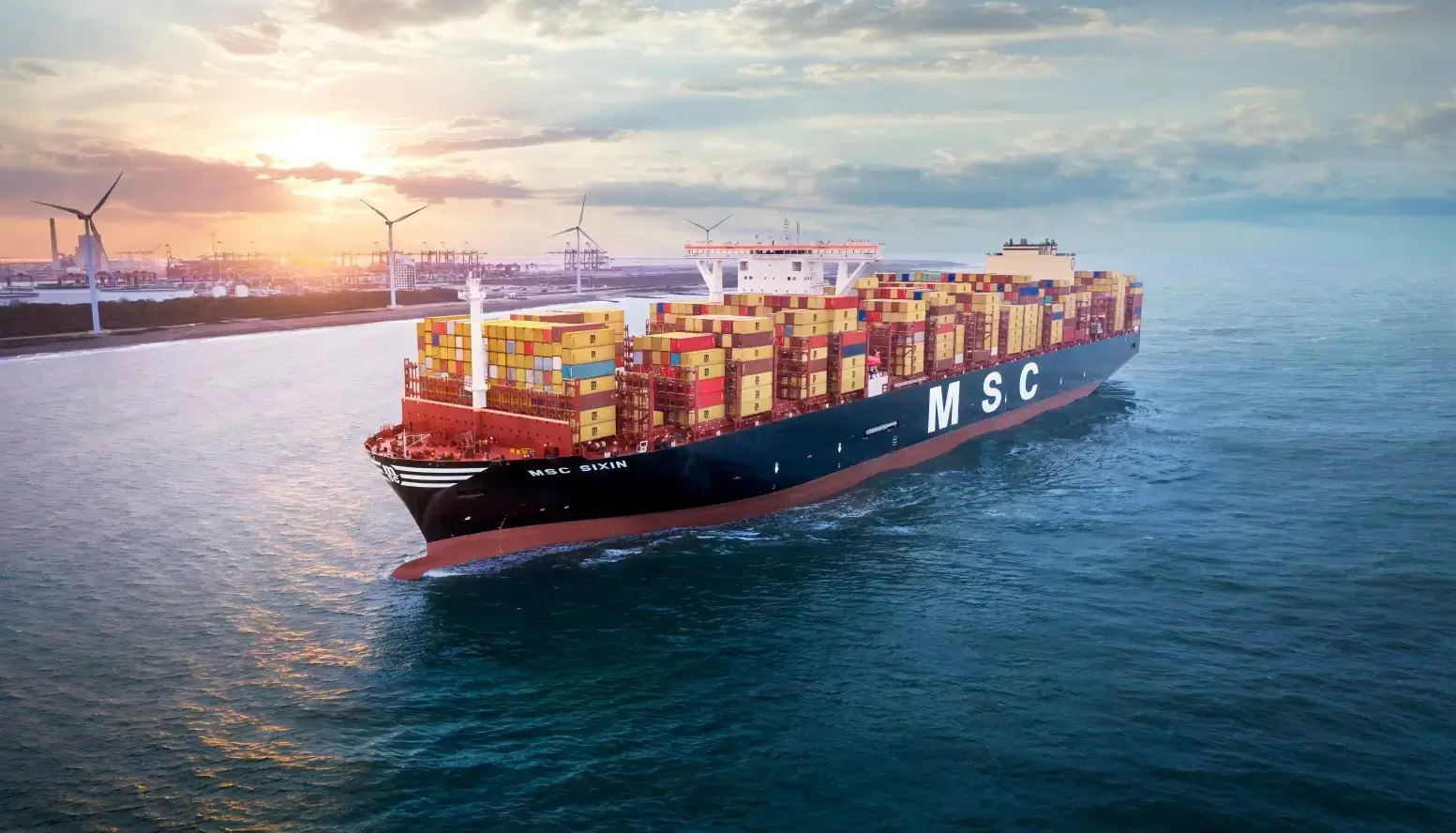
Global Trade
Connecting nations through sea routes
Merchant Navy vs. Indian Navy
Merchant Navy
Commercial: Focus is on global profit, trade, and transport.
Job Type: Contract-based employment with private global companies.
Vessels: Tankers, Bulk Carriers, Container Ships.
Indian Navy
Defense: Focus is on national security and warfare.
Job Type: Government service (Defense personnel).
Vessels: Warships, Submarines, Aircraft Carriers.
How Education Works in India
The path from School to Ship is highly regulated.
Eligibility Pathways
Possible entry routes based on your current qualification level:
After 10th / ITI
GP Rating
After 12th PCM
DNS / B.Sc. Nautical Science / B.E/B.Tech Marine Engineering
Engineering Degree (Mech/Elec/Naval/Marine(Non-DGS Approved))
GME
Engineering Degree (Electrical)
ETO
Diploma (Elec/Mech/Naval/Ship Building)
DME
Diploma in Electrical Stream Engineering
ETO
After Any Degree or Diploma
CCMC (Catering)
After Degree in Hotel Management
OCCP
Entrance Exam (IMU-CET)
Mandatory Common Entrance Test conducted by Indian Maritime University for admission to most reputable colleges.
Pre-Sea Training
Specialized residential course (B.E./ B.Tech Marine Engineering / B.Sc Nautical Science / DNS) at a DG approved institute.
Onboard Training
Join a ship as a Cadet or Trainee Engineer to gain required practical sea time and hands-on experience.
Who Controls What?
Understanding the two pillars of Indian Maritime Education.
DG Shipping
The Regulator ("The Police")
The Directorate General of Shipping is the supreme authority. They set the rules, approve colleges, ensure standards, and issue licenses (CDC, COC). Think of them as the government body that makes the laws.
IMU
The Academic Body ("The University")
Indian Maritime University is the central university. They conduct entrance exams (IMU-CET), design the syllabus, and award the actual degrees. Most private colleges are affiliated here.
A Floating City
A merchant ship functions like a self-sustaining city. To keep this city running 24/7, the crew is divided into three specialized departments, each with its own hierarchy and responsibilities.
Deck Department
The Navigators & Cargo Masters
Responsible for Navigation (driving the ship safely), Cargo Operations (loading/unloading), and maintaining the ship's hull.

Loading description...
CAREER HIERARCHY
Officers
Ratings (Crew)
Engine Department
Ship’s Technical & Power Management
Responsible for maintaining the ship's massive engines, generators, and electrical systems to ensure Propulsion.

Loading description...
CAREER HIERARCHY
Officers
Ratings (Crew)
Catering Department
Food, Hygiene & Hospitality
Also known as the Saloon Department. They manage everything from meal preparation to officer cabin housekeeping.

Loading description...
CAREER HIERARCHY
Catering Crew
The Great Divide
The ship's crew is divided into two categories: Management (Officers) and Support (Ratings). Understanding this divide is crucial before you invest time and money.
The Officer
Officers are the decision-makers. They hold a "Certificate of Competency" (License) and carry legal responsibility for the ship and its crew.
Management: Plan voyages, oversee maintenance, lead teams.
Authority: Give orders and are accountable for outcomes.
Watchkeeping: In charge of the ship's navigation or engine room watch.
The Rating (Crew)
Ratings form the workforce. They are skilled manual workers who support the operation by executing specific tasks.
Manual Labor: Chipping, painting, cleaning, mooring, and greasing.
Supervision: Work strictly under orders; told what to do and when.
No Authority: Do not make management decisions or navigation plans.
Choose Your Path Wisely
If you have the academic grades to qualify for an Officer course (DNS/B.Sc/B.Tech), we strongly advise you to pursue the Officer stream directly.
While the Rating profession is dignified and essential, choosing it when you are capable of becoming an Officer limits your career potential. The difference in lifestyle, growth, and financial freedom is substantial.
The Officer Path
High Salary
Starts around $3,000/month. Can reach $12,000–$20,000+ as Captain or Chief Engineer.
Short Contracts
Typically 4 to 6 months on, followed by long paid/unpaid vacations.
Perks & Lifestyle
Private cabin, family carriage allowance (wife/kids can join), managerial status.
The Rating Path
Low Starting Salary
Starts ~$400 – $900/month. With experience, can reach $1,200 – $1,800/month depending on rank and company. Growth is limited compared to officers.
Lack of Authority
You execute orders. You do not plan or decide. Work is constantly supervised.
Hard Lifestyle
Shared cabins (often), manual labor intensive, strict hierarchy.
The "Conversion" Trap
Agents will tell you: "Join as GP Rating, it's cheaper, and you can become an Officer later."
This is theoretically possible, but practically a nightmare.
- You need 36 months of sea time (vs 12 months for cadets).
- You must study for exams while working manual labor shifts.
- You have to take months of unpaid leave for classes in UK/India.
- It costs a huge amount of money later to clear these exams.
92%
Stay as
Ratings
Statistics show over 92% of people who join as ratings retire as ratings.
When should you choose Rating?
Only choose the Rating path if you have severe financial limitations that prevent you from affording the Officer course fees, or if you do not meet the academic eligibility required for Officer courses. It is an honorable job, but be aware of the ceiling.
Chart your course
to the Merchant Navy
Maritime education is unique. It combines Practical Skills, Theoretical Knowledge, and rigorous Safety Training.
Deck Department
Engineering Dept
Ratings & Catering
01. Deck Officer Standard
Entry Qualification
- • After 12th Pass: PCM-60% & English (10th/12th)-50%
- (or)
- • B.E./B.Tech: Aggregate-50% (IIT/AICTE Recognized) & English (10th/12th)-50%
- (or)
- • After B.Sc: Phys/Chem/Math/Electronics (with Physics) Aggregate-55% & English (10th/12th)-50%
Status & Age Limit
Unmarried. Min 17 years; Max age 25–32 (varies by category/gender).
Medical Mandate
6/6 Vision is mandatory. No color blindness.
General Condition
Must meet physical endurance standards approved by DGS medical examiners.
* Relaxation: PCM 5% for SC/ST. English 5% for ST (Candidate whose native is Lakshadweep/Andaman & Nicobar)
02. Engine Officer Standard
Entry Qualification
- • After 12th Pass: PCM-60% & English (10th/12th)-50%
- (or)
- • Lateral Entry–After Diploma: Mech/Marine/Electrical/Ship Building Aggregate-55% & English (10th/12th/Diploma)-50%
- (or)
- • Degree/ATS: First Year Aggregate-60% & English (10th/12th/Diploma/First Year)-50% (ATS not applicable to MERI, IMU)
Status & Age Limit
Unmarried. Min 17 years; Max age 25–32 (varies by category/gender).
Medical Mandate
6/6 Vision is mandatory. No color blindness.
General Condition
Must meet physical endurance standards approved by DGS medical examiners.
* Relaxation: PCM 5% for SC/ST. English 5% for ST (Candidate whose native is Lakshadweep/Andaman & Nicobar).
* Other: DME, GME & ETO (Diploma/Engg – Mech/Marine (Non-DGS)/Elec/Ship Building).
03. Catering Department
Hospitality Entry
- • After 10th Pass (or) Degree/Diploma:10th Percentage-40% & English-40%
- (or)
- • Degree/Diploma in Hotel Management: Degree/Diploma in HM with 40% English
Age Limit
Min 17.5 years; Max age 25–34 (varies by category/gender).
General Condition
Must meet DGS eyesight and physical fitness standards.
Unlock the gateway to
India’s maritime campuses
The Indian Maritime University Common Entrance Test (IMU-CET) is the national-level entrance examination for admission into DG Shipping–approved maritime courses offered through Indian Maritime University (IMU) and its affiliated institutes.
What is IMU-CET?
Conducted once every year
Online (Computer Based Test – CBT)
Admission through rank-based counselling
Valid for IMU campuses and affiliated institutes
Courses Offered
B.Sc Nautical Science
Officer Pathway - 3 Year Degree
Diploma in Nautical Science (DNS)
Officer Pathway - 1 Year Pre-sea
B.E./B.Tech Marine Engineering
Engineer Pathway - 4 Year Degree
Admission is subject to academic, age and medical eligibility as per DG Shipping norms.
Exam Pattern & Weightage
Standardized MCQ format for core science & aptitude
Total Duration
3 Hours
Total Questions
200
Negative Marking
-0.25
Question Type
MCQs
| Subject | Questions |
|---|---|
| Physics | 50 |
| Mathematics | 50 |
| Chemistry | 25 |
| English | 25 |
| General Aptitude | 25 |
| General Knowledge | 25 |
IMU-CET Syllabus Breakdown
Class 11th & 12th Standard (CBSE/ICSE/State Board) syllabus
Class 11th Syllabus
Mathematics
Physics
Chemistry
Class 12th Syllabus
Mathematics
Physics
Chemistry
Schedule 2026-27*
IMU Common Entrance Test Timeline
IMU-CET Application fee for UG Programme
₹ 1200
GEN / OBC (NCL)
₹ 800
SC / ST Candidates
Crucial Info for Parents
IMU-CET is mandatory for all reputable maritime courses.
Medical unfitness can cancel admission even after allotment.
Beware of agents promising "guaranteed seats" for cash.
Clearing the exam alone is not sufficient for final admission.
Don't waste your rank. Align your goals now.
Secure your training route
sponsorships and seats
In India, DG Shipping (Govt. of India) regulates maritime training institutes (MTIs). Choosing the right "sponsorship" route is critical for ensuring mandatory sea-time and competency progression.
The Official Definition
"Sponsorship" means a shipping company supports a candidate's training pathway and provides a pathway to structured shipboard training and sea-time needed for competency progression.
DG Shipping Requirement
The sponsoring company must ensure the candidate acquires sea-time soon after training. They must furnish an undertaking to employ sponsored candidates for 3 years.
Why this matters?
It is the regulatory basis for why sponsorship is treated seriously. It guarantees sea-time continuity for your immediate Certificate of Competency (CoC) exam.
Admission Route vs. Sponsorship Route
Route A
Admission First
You select a DG Approved institute, complete formal admission, and then pursue company placement through valid channels later.
Route B
Sponsorship First
You clear a company selection process (Test + Interview + Medical), and then join a DG Approved institute as per the company's training plan.
Must-Do Verification Checklist
Verify these 5 critical items before paying any fees to a Maritime Training Institute (MTI).
Institute is DG Shipping approved (Check MTI listing).
Course is DG Shipping approved (Check training branch list).
Check for Withdrawal, Suspension, or Show-Cause notices.
Verify the Institute’s CIP Grade using the latest official report.
Confirm admission pathway aligns with current DG Shipping circulars/guidelines.
CIP Grading System
The Comprehensive Inspection Programme (CIP) is a structured monitoring system integrated with grading based on infrastructure and faculty.
- Use CIP as a shortlist tool, not marketing claim.
- Compare institutes offering the same course.
- Re-check validity; grading cycles change over time.
RPSL Validation
Recruitment and Placement Services License (RPSL) is the official verification layer for entities licensed to place seafarers.
The Critical Rule:
If a company or agent is involved in recruitment, verify they are in DG Shipping’s RPSL listings and not under withdrawal orders.
Note: DG Shipping guidance focuses on compliance obligations via undertakings rather than a single cadet sponsorship list.
Student & Parent Advisory
Always choose a DG Shipping Approved institute + course (not just a brand name).
Treat any "Guaranteed Job/Berth" promise with extreme caution.
Safest verification is DG Shipping Approval + CIP Grade + RPSL checks.
Choose the right sponsorship route. Build a secure career.
Rise through the ranks and
beyond the horizon
Promotions at sea are strictly governed by DG Shipping and STCW requirements. Growth depends on approved training, documented sea service, and clearing specific competency examinations.
Deck Progression Path
"On the deck side, growth is fastest when you maintain sea-time continuity and meet DG Shipping's exam requirements on time."
Validated Milestones
Nautical written/oral exams and Master (Foreign Going) structured pathways including Advance Ship-board Management and Manoeuvring Simulators.
3-hour written papers (50% pass mark)
Approved Training Record Books
Shore-Side Opportunities
- Marine Operations
- Port/Terminal Operations
- HSQE Audits & Safety
Engine Progression Path
"Engine promotions depend on documented competence + sea service (not just 'years worked')."
Technical Focus
Management of propulsion, fuel/lube systems, fresh water generators, and automation-heavy engine rooms.
Progression tied to MMD eligibility mapped to STCW A-III/1.
Shore-Side Opportunities
- Technical Superintendent
- Fleet Maintenance Planning
- Shipyard Project Manager
ETO Progression Path
System Responsibility
Automation, repair of electronic systems, instrumentation, and modern electrical technologies (LNG/LPG vessels).
Shore-Side Opportunities
- • Fleet ETO Manager
- • Automation Specialist
- • Commissioning Support
Rating Hierarchy
Deck Ratings
- Bosun
- Able Seaman (AB)
- Ordinary Seaman (OS)
Engine Ratings
- Fitter
- Oiler / Motorman
- Wiper
Certification Flow
Careers grow through sea service + proper documentation (TRB) + correct certification, not informal promises.
Note: Avoid shortcuts or "package" claims.
Hospitality Pathway
Opportunities
Passenger and hospitality-heavy cruise vessels offer expanded service roles for qualified hospitality professionals.
The Verified Reality Check
Follow DG Shipping circulars and join only approved courses.
Complete approved sea service with correct supervised duties.
Meet exam schedules and certification requirements on time.
Professional guidance for long-term maritime growth.