

UK MRV to UK ETS: The 2026 Maritime Transition Guide

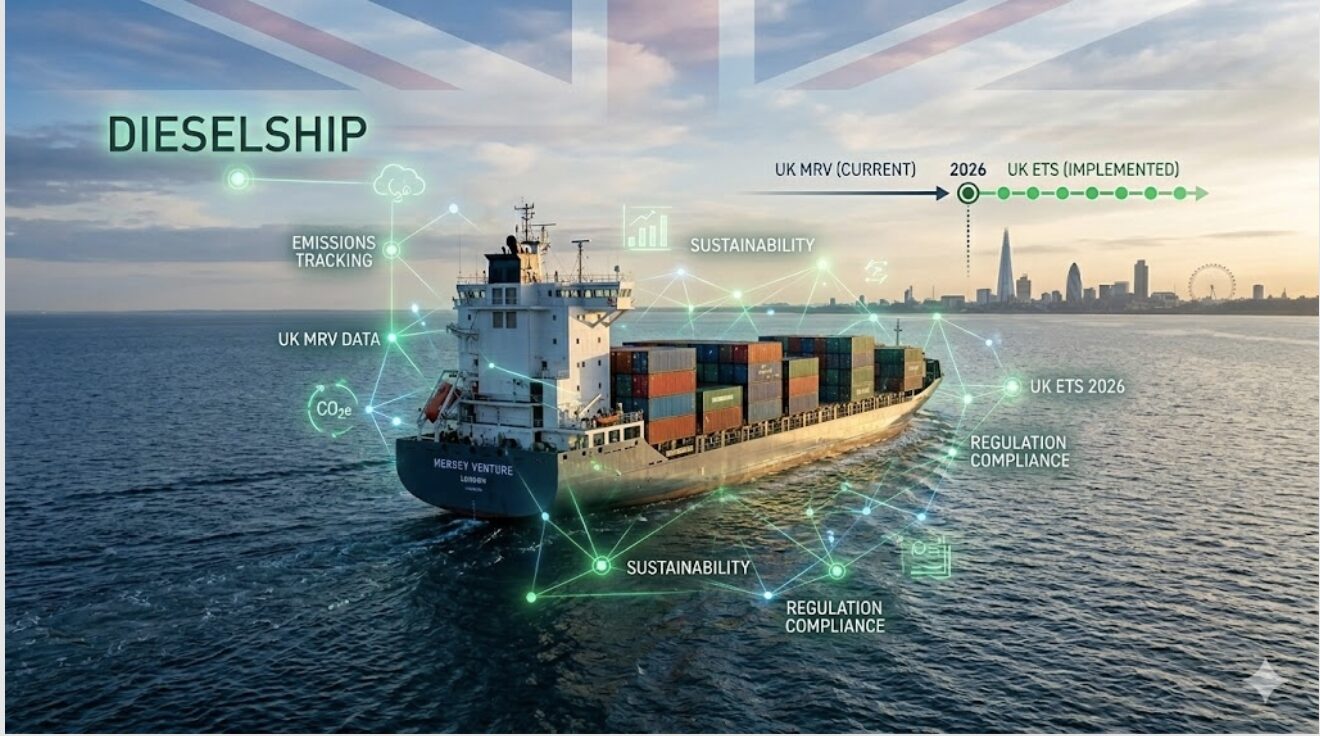
Regulatory Update · UK Maritime Law
UK MRV to UK ETS Transition
A comprehensive breakdown of the shift from emissions data collection to active carbon pricing in the UK domestic maritime sector.
Legacy UK MRV Regime
Incoming UK ETS
Required Action mandatory
New New scheme rule
Exempt Excluded from ETS
Revoked No longer applicable
1
Structural Shift in Doctrine
Sunsetting April 2026
UK MRV Framework
- Passive data collection and reporting only
- Focus strictly on Carbon Dioxide (CO₂)
- Compliance managed via Private Verifiers
- No financial cost attached to emissions
- Vessel-centric: individual Ship Monitoring Plans
- Failed to drive fleet-level emission reductions
Effective July 2026
UK Emissions Trading Scheme
- Active "Cap and Trade" carbon pricing market
- Covers CO₂, Methane (CH₄), and Nitrous Oxide (N₂O)
- Direct approval by State Regulators (EA, SEPA, etc.)
- Emissions become a massive operational expense
- Corporate-centric: Fleet-wide Emissions Monitoring Plans
- Sustainable fuels are "zero-rated" to force adoption
Core Impact: The UK ETS decisively transforms carbon from a purely environmental externality into a direct, variable operational expenditure. Shipowners must buy and surrender financial allowances matching their verified output.
2
The "Double Surrender" Timeline
April 3, 2026
MRV Revoked
Revoked The legacy UK MRV regulations are formally withdrawn. Operators must submit a "partial emissions report" covering Jan 1 to Apr 2 by the end of May 2026.
July 1, 2026
ETS Commences
New A truncated 6-month reporting period begins. Emissions generated from this date forward require the purchase of financial allowances.
April 30, 2028
Double Surrender
Required To ease financial shock, operators pay for both 2026 and 2027 scheme years simultaneously on this date. Normal annual cycles follow.
3
Geographic Scope & Surrender Rules
Allowance Surrender Obligations by Voyage Type
| Voyage / Activity | Legacy MRV | Incoming UK ETS |
|---|---|---|
| Domestic Transit (UK Port to UK Port) | Monitoring Required | 100% Surrender Must acquire allowances for 100% of emissions. Excludes Crown Dependencies. |
| All In-Port Activities (UK) | Monitoring Required | 100% Surrender Applies to hoteling, cargo operations, and shifting, regardless of prior/next voyage origin. |
| Irish Sea (Great Britain to Northern Ireland) | Monitoring Required | 50% Surrender Halved obligation to maintain parity with Republic of Ireland routes and avoid trade distortion. |
| International Transit (UK to Non-UK) | Monitoring Required (Non-EEA) | 0% Surrender Currently outside scope, pending 2028 review and EU bilateral negotiations. |
Key Exemptions: Scottish Ferry Services (to protect island demographics), Military, and Commercial Fishing are currently exempt. Offshore vessels are delayed until Jan 1, 2027, to sync with EU regulations.
4
The Shift in Regulatory Liability
| Aspect | Legacy MRV Framework | Incoming UK ETS Framework |
|---|---|---|
| Point of Liability | Siloed at the individual ship level | Changed Default is the Registered Owner, unless formally delegated via written agreement to the ISM Manager. |
| Monitoring Plan (EMP) | Ship-specific plan submitted to private Verifier | New A single, consolidated Fleet-Wide EMP submitted directly to the State Regulator via the METS digital portal. |
| Document of Compliance (DoC) | Issued by verifier, carried onboard | Removed DoC permanently eliminated. Compliance is tracked centrally by the state via the METS platform. |
| Role of Private Verifiers | Approved the monitoring plan and the data | Changed Stripped of authority to approve plans. Now strictly limited to verifying the final Annual Emissions Report (AER). |
5
Macroeconomic Impact & Distribution
Phase I Financial Burden (£ Millions)
The Commercial Reality
The scheme forces a massive capital redistribution. Phase I will trigger approximately £1,900 million in direct allowance purchases. Because of complex offshore ownership structures, nearly 96% of this burden falls on foreign entities operating in UK waters.
Crucially, the legislation does not automatically pass costs to the charterer. Shipowners must immediately rewrite charterparty agreements (e.g., BIMCO ETS Clause) to ensure the "polluter pays" principle is legally enforced in private contracts.